We have learned about ''Simple Present'', that says an action that happens on present time. But, we have to understand how to explain an action or state that is happening in the same moment.
For this, we always have it:
verb to be (pres.) + verb - ing
Ex: I am working now.
We are going.
Question form: Are you working now? (Remember that ''verb to be'' in questions comes first than pronoum)
Affirmative form: Yes, I am working now.
Negative form: No, I am not working now.
2. Simple Past
Used for say a thing that happened and overed in the past.
For asking:
Did you come here? (Did is past of ''do''. It is a aux.verb, indicating an action in past)
Yes, I came here. (CAME is a verb in past)
No, I did not come here. (''Did'' comes to the sentense with ''not'', and ''come'' is on present, because of ''did'', that is past)
* Form of verb
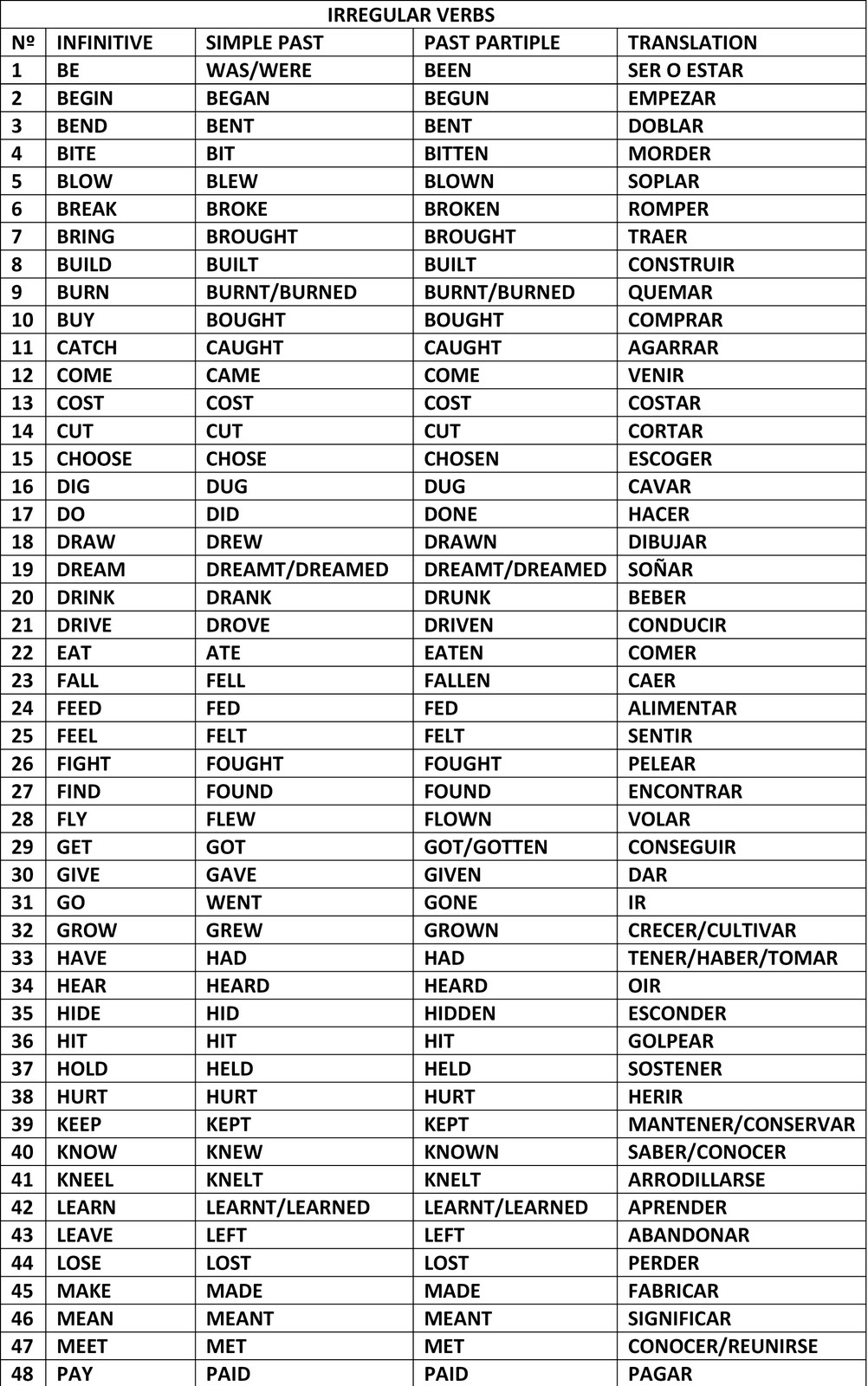
We always have a verb in past form on ''Simple Past''. But, the verbs is divided in IRREGULAR and REGULAR verb. Some of there are irregular, and others are regular.
Regular verb: the verbs that are regular always comes -d (or -ed) after the verb. For example:
I lived in Miami.
I stopped driving here.
________ observation ________
- Verbos já terminados em E apenas ganham o D: dance = danced
- Verbos terminados em consoante+y, perdem o Y e ganham IED: study = studied.
- Verbos terminados em vogal+y, apenas ganham ED: play = played.
- Verbos terminados em consoante+vogal+consoante e cuja última sílaba seja a tônica, dobram a última consoante e ganham ED: stop = stopped
___________________________
Irregular verb: they have all forms. Don't have a specific rule to know. Below, we have a list of verbs. (Obs: the third column is other thing. At this moment, forget it. Look for the first and second column). Image capted on https://irregularverbsforus.files.wordpress.com/2011/09/verboos_11.jpg)